
INTREPID 80-31 RX/TX debuts at Space Tech Expo Europe 2026 in Bremen, Germany
INTREPID 80-31 RX/TX made its debut: a flyaway Ka-band satellite terminal, developed with Picosats and built on PL-GSS, shown for the first time at Space Tech Expo Europe 2026, from 17 to 19 November at Messe Bremen. More than 1,000 exhibiting companies, participants from over 60 countries, and the final edition in Bremen before the show moves to Frankfurt. Engineers, mission operators, system integrators, space agencies, defence stakeholders. The largest B2B space event in Europe was the right place to start.
Watch the video from the booth
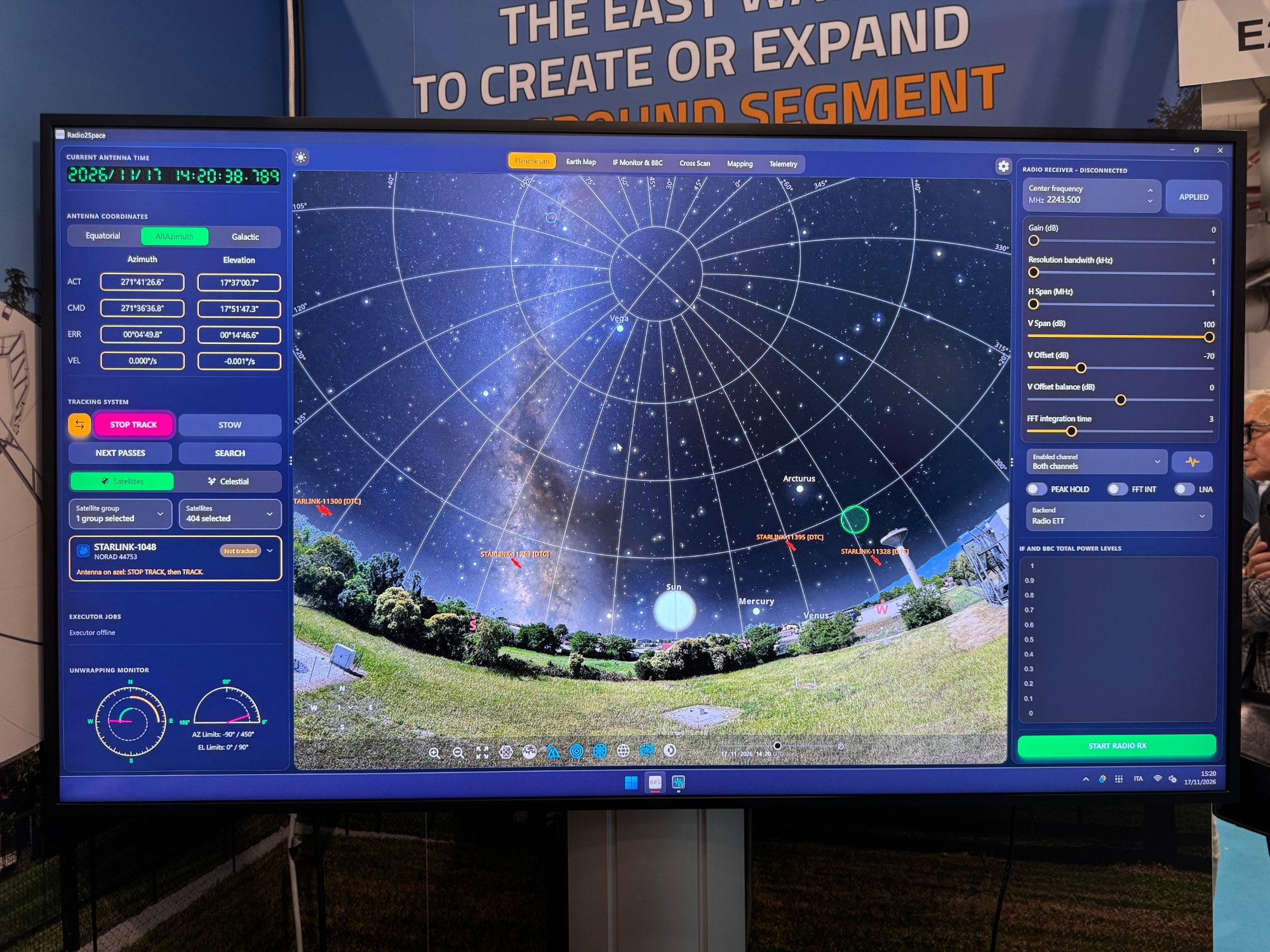
We recorded a video directly from the stand, before the show floor opened. Filippo Bradaschia, President and CEO of PrimaLuceLab, and Enrico Vazzoler, Chief Software Projects Officer, explain why you do not need to build your ground station from scratch, introduce INTREPID 80-31 RX/TX, and show how Radio2Space controls it live at the booth.
Why we chose Space Tech Expo Europe
Choosing Space Tech Expo Europe for this debut was a deliberate decision. This is where the European space supply chain meets: manufacturers, subsystem suppliers, agencies, research institutes and integrators, all looking for the technologies their missions need. And there is a question every mission faces sooner or later: who controls the ground segment? Ground segment is strategic infrastructure. We came to Bremen to give a Made in Italy answer. Not a concept on paper. A real terminal, set up at our booth, in front of the people who build and operate space missions.
What we showed at the booth
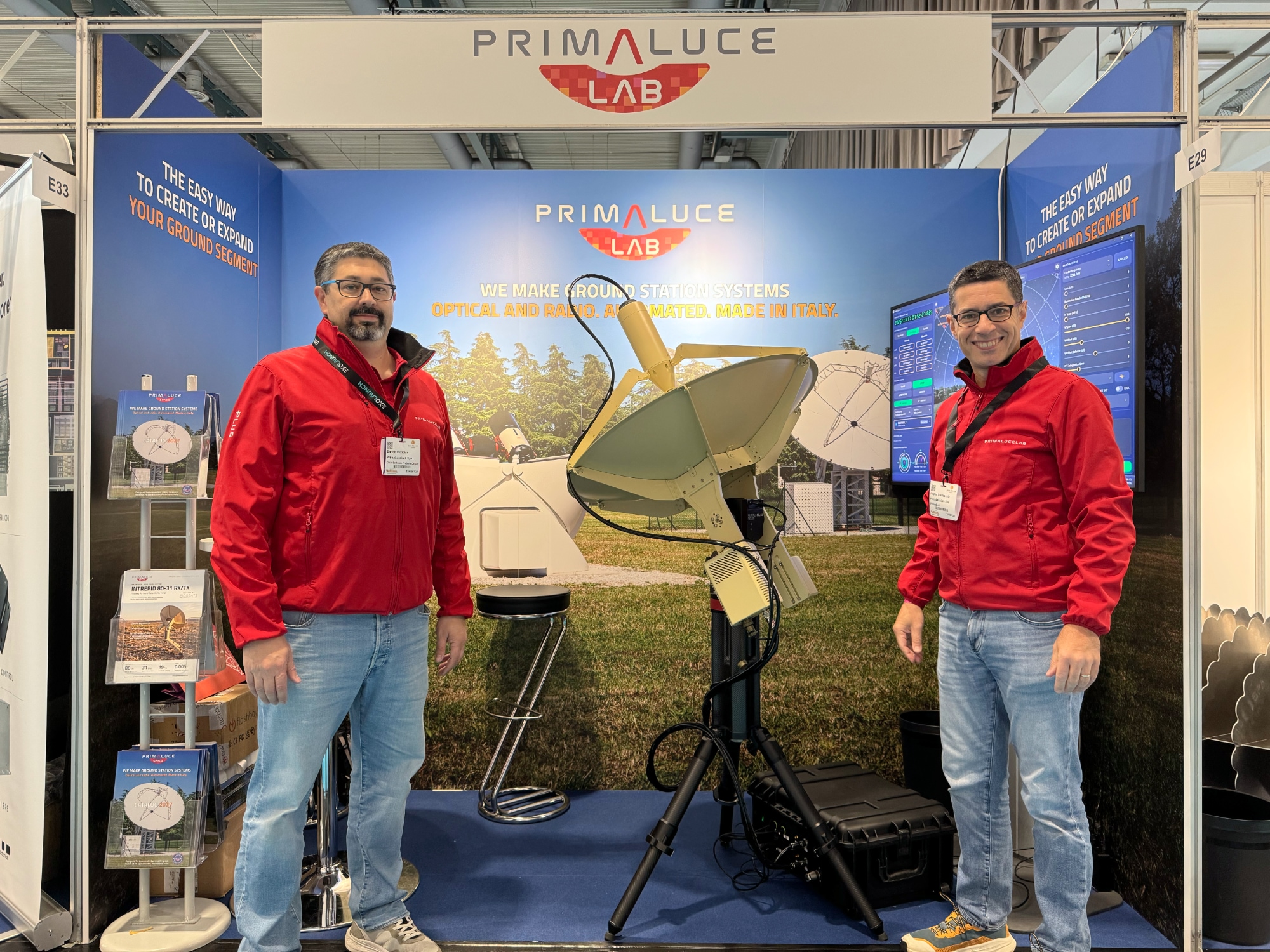
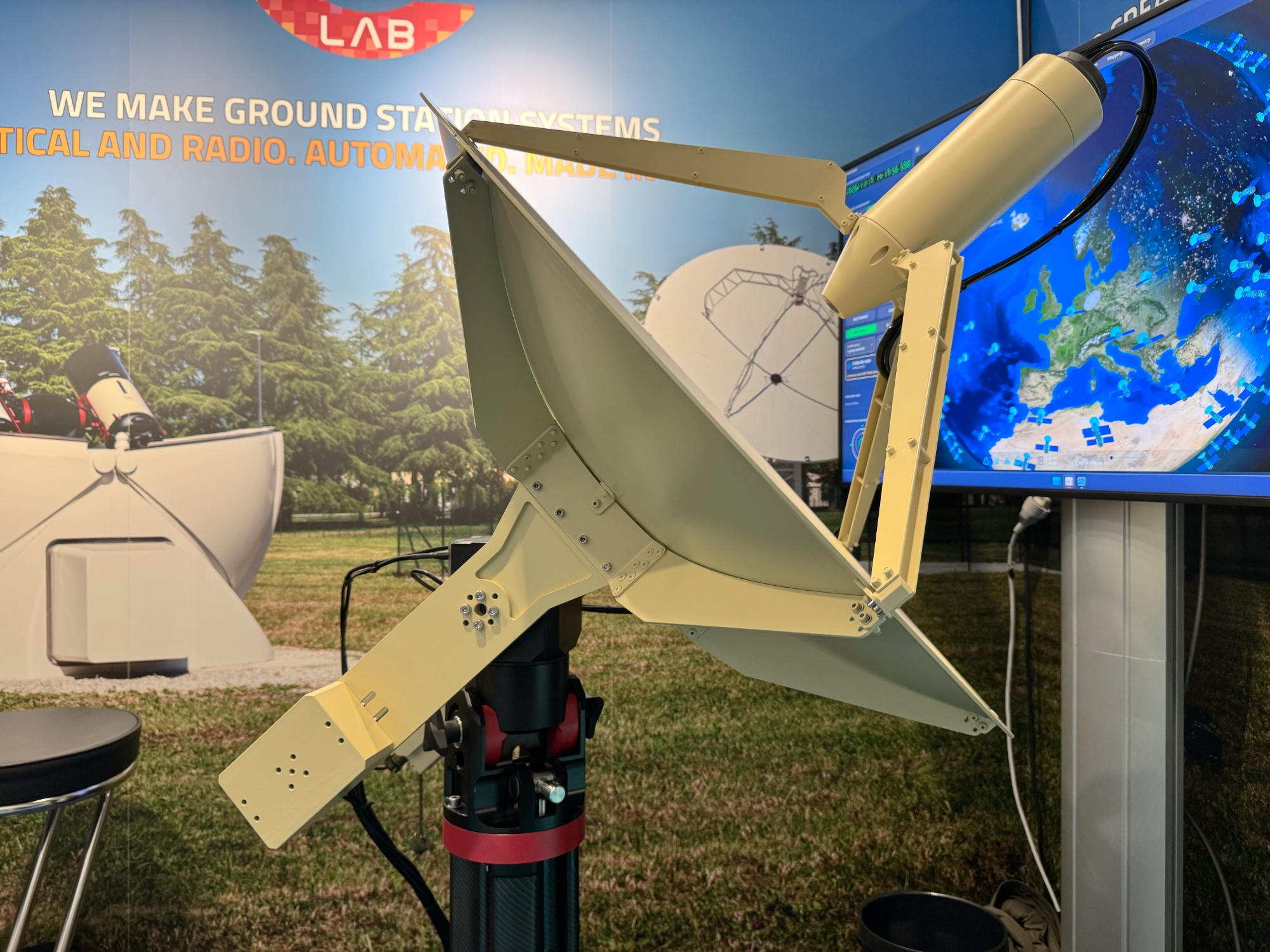
At booth E33, visitors could see the PrimaLuceSpace ground station systems: INTREPID radio ground stations and optical Observatory Stations, all built on PL-GSS. And INTREPID 80-31 RX/TX, set up at the booth and controlled live with Radio2Space, our software. It is a complete terminal, not only an antenna. An 80 cm solid reflector at prime focus, tested up to 31 GHz. A receive and transmit Ka-band RF chain, with a GaN BUC starting from 6 W. The SATURN mount, with a slewing speed up to 19 °/s and a pointing accuracy of 0.005°. Automatic pointing and tracking tracking of LEO, MEO and GEO satellites. Transport cases, to take it where the mission needs it. And it is configurable to your mission requirements.
Two Italian companies, one complete terminal
INTREPID 80-31 RX/TX is not just a new product. It is a proof of how PL-GSS works. Picosats, an Italian company with deep expertise in RF and Ka-band, designed the feed and integrated the receive and transmit chain. We built the 80 cm solid dish antenna, the tracking mount and PL-GSS. Two different technologies, from two different companies. And we integrated them easily, because PL-GSS is built for this. It handles pointing, tracking, automation and remote operation, while the mission-specific elements stay in the hands of the team that knows them best. The result is a complete system, from the reflector to the software, designed, developed and made in Italy. And it stays open. Through REST APIs, the terminal connects to your mission control software, or to Radio2Space if you do not have one yet.
What the response at the show confirmed
The conversations at the booth confirmed something we already believed. Teams do not want to build everything from scratch, and they do not want a closed system they cannot control. They want to start from what already works, and add only what is specific to their mission. Many visitors came to us interested in PL-GSS, and in how pointing, protection and remote control that already work let them create their ground station faster and safer. INTREPID 80-31 RX/TX showed it in practice. We are grateful to Picosats for the collaboration that made it possible, to the organizers of Space Tech Expo Europe, and to everyone who stopped by the booth.
Start a conversation about your ground segment
If you are building or evolving a space mission and want to understand whether PL-GSS, or the new INTREPID 80-31 RX/TX, is the right foundation for your ground segment, we are ready to talk. Describe your mission, your constraints, and where you want to go. We will help you understand what is possible.